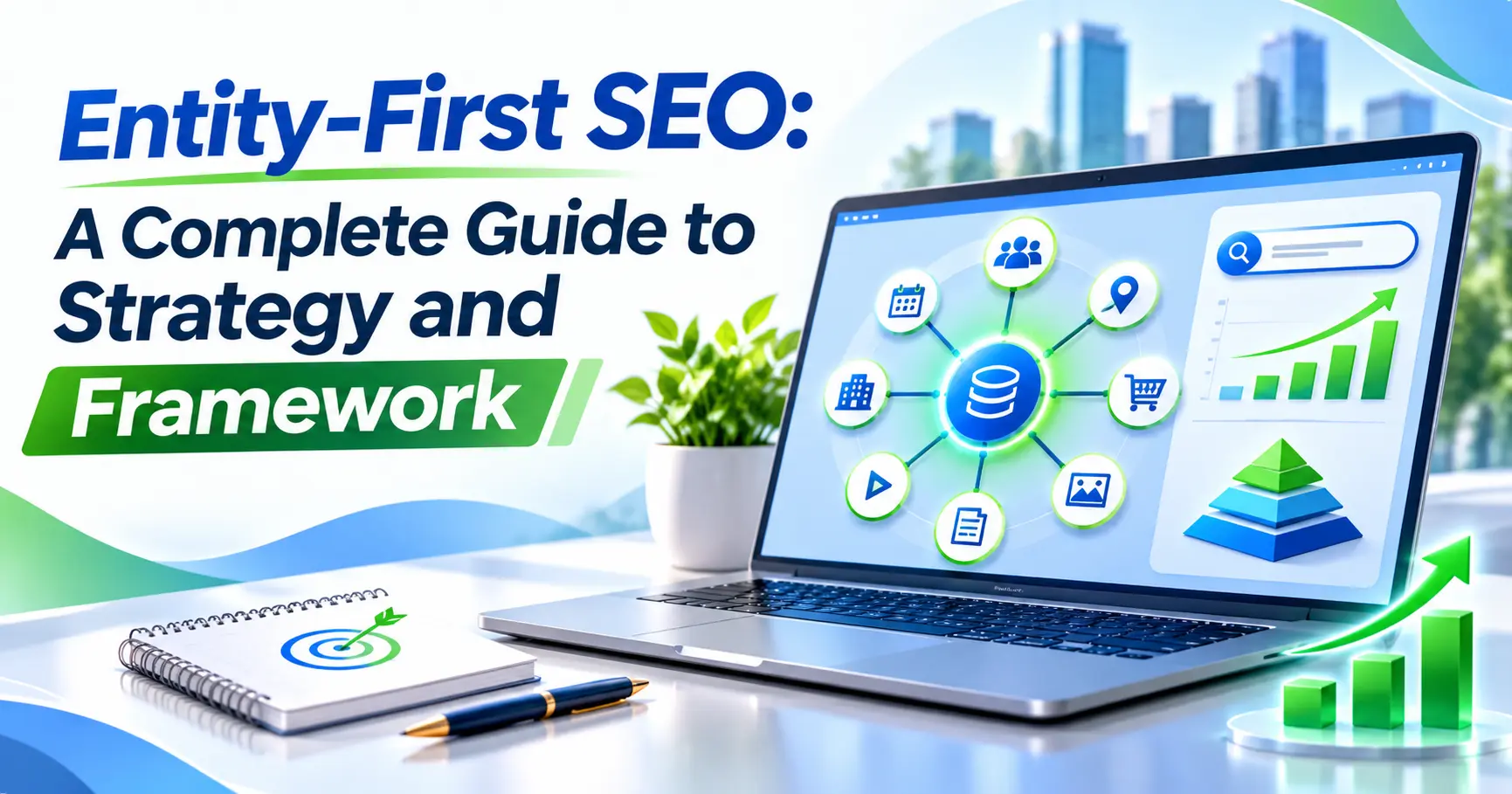
Search engines have evolved beyond simply matching the exact words users enter. They can now better understand the meaning behind search queries by identifying people, businesses, products, locations, and concepts, as well as the relationships between them. This makes Entity-First SEO an important approach to creating relevant content and helping search engines understand what a website is about.
Traditional SEO often starts with keyword research and focuses on optimizing webpages around specific search terms. Entity-First SEO takes a broader approach by focusing on the topics, concepts, and relationships behind those keywords. Rather than creating content around isolated phrases, businesses can build connected, informative resources that provide clearer context for both search engines and readers.
In this guide, we’ll explore what Entity-First SEO means, how it works, its key benefits, and how to develop an effective entity-first SEO strategy for your website.

What Is Entity-First SEO?
Entity-First SEO is an approach to search engine optimization that focuses on identifying important entities related to a website’s main topic and building meaningful connections between them. An entity is a clearly identifiable person, place, organization, product, service, or concept that search engines can recognize and understand. For example, a digital marketing website may cover related entities such as search engine optimization, content marketing, keyword research, Google Search, and link building.
Unlike traditional SEO approaches that focus mainly on keyword usage, entity-first SEO emphasizes meaning, context, relevance, and relationships between topics. By explaining how related concepts connect, websites help search engines better understand their content and overall subject matter. As part of effective SEO services, this approach supports established SEO practices by encouraging clear, relevant, and well-organized content that delivers value to readers. It is a strategic approach, not a separate Google ranking factor.
Entity-Based SEO vs. Traditional Keyword-Based SEO
Traditional keyword-based SEO focuses on identifying the search terms people use and creating content that matches their search intent. Keywords remain essential because they help businesses understand what their target audience is searching for and how they phrase their queries. However, effective SEO goes beyond simply targeting and repeating keywords throughout a webpage.
Entity-based SEO builds on this foundation by focusing on the broader meaning of search queries and the connections between related topics. For example, a business targeting the keyword “website development” should also cover relevant concepts such as website design, front-end development, back-end development, content management systems, user experience, and website maintenance. Including these related topics adds context, makes content more comprehensive, and helps search engines better understand the webpage’s subject.
The following table highlights the key differences between the two approaches:
| Traditional Keyword-Based SEO | Entity-Based SEO |
| Focuses on target keywords | Focuses on topics and related entities |
| Targets specific search queries | Considers broader meaning and context |
| Starts with keyword research | Builds around related topics and entities |
| Optimizes individual pages for search terms | Connects relevant content across the website |
| Tracks keyword rankings and visibility | Considers broader topical relevance and entity relationships |
Both approaches complement each other. Keywords help identify what people are searching for, while entities provide context and help connect related topics. Combining both approaches allows businesses to create relevant, well-structured content that better addresses user needs.
Why Is Entity-First SEO Important?
Search engines analyze the context and meaning of a webpage to understand how its content relates to users’ search queries. Clearly defined entities and meaningful connections between related topics provide valuable context, helping search engines interpret website content more effectively. An entity-focused content strategy also helps businesses strengthen topical relevance, organize related information, and build a stronger online presence. Here are some key SEO benefits:
1. Better Context and Content Understanding
When a webpage clearly covers its main topic and related concepts, it provides search engines with better context than content that simply repeats a target keyword. This helps search engines understand the page’s subject and how it relates to other relevant entities.
2. Stronger Topical Relevance
Publishing useful content around related entities helps cover different aspects of a website’s main subject. For example, a website about SEO can publish connected resources on technical SEO, on-page optimization, keyword research, and content strategy.
3. Improved Content Organization
Connections between related entities help businesses organize their websites into meaningful topic clusters. Internal links create a logical structure that helps visitors explore related information.
4. Clearer Brand and Business Identity
Consistent information about your business, services, products, and expertise helps search engines recognize your organization and distinguish it from other entities with similar names or characteristics.
5. Better Support for Semantic Search
Semantic search focuses on understanding the meaning and intent behind a query. Content that explains relevant concepts and their relationships can provide useful context for searches that use different wording but have similar meanings.
These benefits are not automatic ranking guarantees. They depend on content quality, technical implementation, website structure, and how well the information satisfies users.
How to Build an Effective Entity-First SEO Strategy
A successful entity-first SEO strategy requires more than simply including related keywords on a webpage. It involves identifying important entities, organizing relevant content, and building meaningful connections between related topics across your website.
Here are practical steps to implement this approach.
1. Identify Your Main Entities
Start by identifying the main topics and entities related to your business, industry, products, and services. These entities will guide your content strategy and help you determine which topics need dedicated webpages.
For example, a web development company may focus on entities such as:
- Website development
- WordPress development
- Custom website development
- E-commerce development
- Website design
- Website maintenance
Choose entities that are closely related to your business and audience’s interests. Avoid covering unrelated topics just to increase the number of subjects on your website.
2. Research Related Entities and Topics
After identifying your primary entities, explore the related concepts and subtopics that help explain your main subject. Focus on the information users need to understand the topic fully. Use Google search suggestions, related searches, industry publications, competitor content, and customer questions to discover relevant topics and build a more comprehensive content strategy.
For example, the main entity “technical SEO” may connect with:
- Website crawling
- Indexing
- XML sitemaps
- Robots.txt
- Structured data
- Core Web Vitals
- Website architecture
Covering these related topics helps you create more valuable content and address different aspects of your main subject.
3. Create Content Around Search Intent
Once you identify your entities, focus on understanding what users want to learn about them, as different search queries can reflect informational, navigational, or transactional intent. For example, someone searching for “what is WordPress SEO” is looking for an explanation, while a user searching for “WordPress SEO services” may be seeking professional assistance. Create content that matches each search intent by explaining concepts clearly, answering relevant questions, and providing useful examples instead of unnecessarily repeating keywords or related terms throughout the content.
4. Build Topic Clusters and Internal Links
Organize related content into meaningful topic clusters. A main pillar page should cover a broad subject, while supporting articles explore specific subtopics in greater detail.
For example, an SEO pillar page can link to supporting articles covering topics such as
- Keyword research
- On-page SEO
- Technical SEO
- Link building
- Local SEO
Use descriptive anchor text to link these pages naturally. Internal links help visitors navigate related information and provide additional context about the relationship between different pages.
5. Use Structured Data Where Relevant
Structured data is a standardized format that helps search engines better understand specific information on a webpage by describing entities such as organizations, products, articles, events, and people. For example, the organization schema provides details about a business, while the article schema identifies information about published content and its author. To support accurate interpretation, use relevant schema types and ensure the structured data matches the visible page content. Although structured data does not guarantee higher rankings or enhanced search results, proper implementation can help search engines understand supported webpage details more effectively.
6. Maintain Consistent Entity Information
Maintain consistent and accurate information about your business, services, authors, and products across your website to build a trustworthy online presence. Use your official business name, correct contact details, clear service descriptions, and reliable author information, and connect your website to official business profiles and trusted external sources where relevant. Avoid outdated, conflicting, or inaccurate details, as clear and consistent information helps visitors and search engines better understand your business identity and the services you offer.
7. Review and Improve Your Content Regularly
Entity-focused SEO requires regular monitoring and continuous improvement to keep your website content accurate, relevant, and well-organized. Audit existing webpages to identify missing information, outdated details, weak internal links, and overlapping content. Use Google Search Console to monitor search queries, impressions, clicks, and indexing data, helping you understand how users discover your content and where improvements are needed. Focus on updating and strengthening existing pages to provide more value rather than creating new content without a clear purpose.
Common Entity-First SEO Mistakes to Avoid
Although Entity-First SEO helps organize related content, poor implementation can lead to unclear information, weak content structure, and unnecessary effort.
Avoid these common mistakes:
- Keyword and entity stuffing: Adding too many related terms without useful information can make content difficult to read.
- Creating unrelated content: Publishing articles outside your website’s main subject area can weaken its topical focus.
- Ignoring search intent: Covering related entities without answering users’ actual questions results in less useful content.
- Misusing structured data: Adding irrelevant or inaccurate schema markup can create errors and mislead search engines.
- Neglecting internal links: Failing to connect related articles makes it harder for visitors to find useful information.
- Expecting quick ranking results: Entity-First SEO is not a shortcut to higher rankings. Results depend on content quality and other SEO factors.
Focus on accurate information, relevant entity connections, and valuable content that matches search intent.
How Entity-First SEO Supports Long-Term Search Visibility
At WaysPro Tech, building a strong online presence starts with a well-planned SEO strategy focused on relevant content, clear website structure, and user needs. Entity-First SEO helps businesses move beyond individual keyword targeting by identifying important entities, connecting related topics, and organizing website content to strengthen topical relevance. When combined with keyword research, technical optimization, internal linking, and quality content development, this approach can support long-term organic growth and search visibility.
Ultimately, Entity-First SEO is not about adding as many entities as possible; it is about creating accurate, valuable, and well-connected content that helps visitors and search engines better understand your website and its main topics.
Frequently Asked Questions
1. What is Entity-First SEO in simple terms?
Entity-First SEO focuses on connecting related topics and concepts to help search engines better understand your website’s content and meaning.
2. Is Entity-First SEO different from traditional SEO?
Yes, traditional SEO focuses mainly on keywords, while Entity-First SEO emphasizes the meaning, context, and relationships between related topics.
3. How do I find relevant entities for my website?
Identify your main topics and discover related entities through Google suggestions, competitor content, and audience questions.
4. Does schema markup help with Entity-First SEO?
Yes, schema markup helps search engines understand your website’s entities and the relationships between them.
5. Is Entity-First SEO important for AI search?
Yes, Entity-First SEO helps AI search systems understand your content, identify related concepts, and provide more relevant answers.