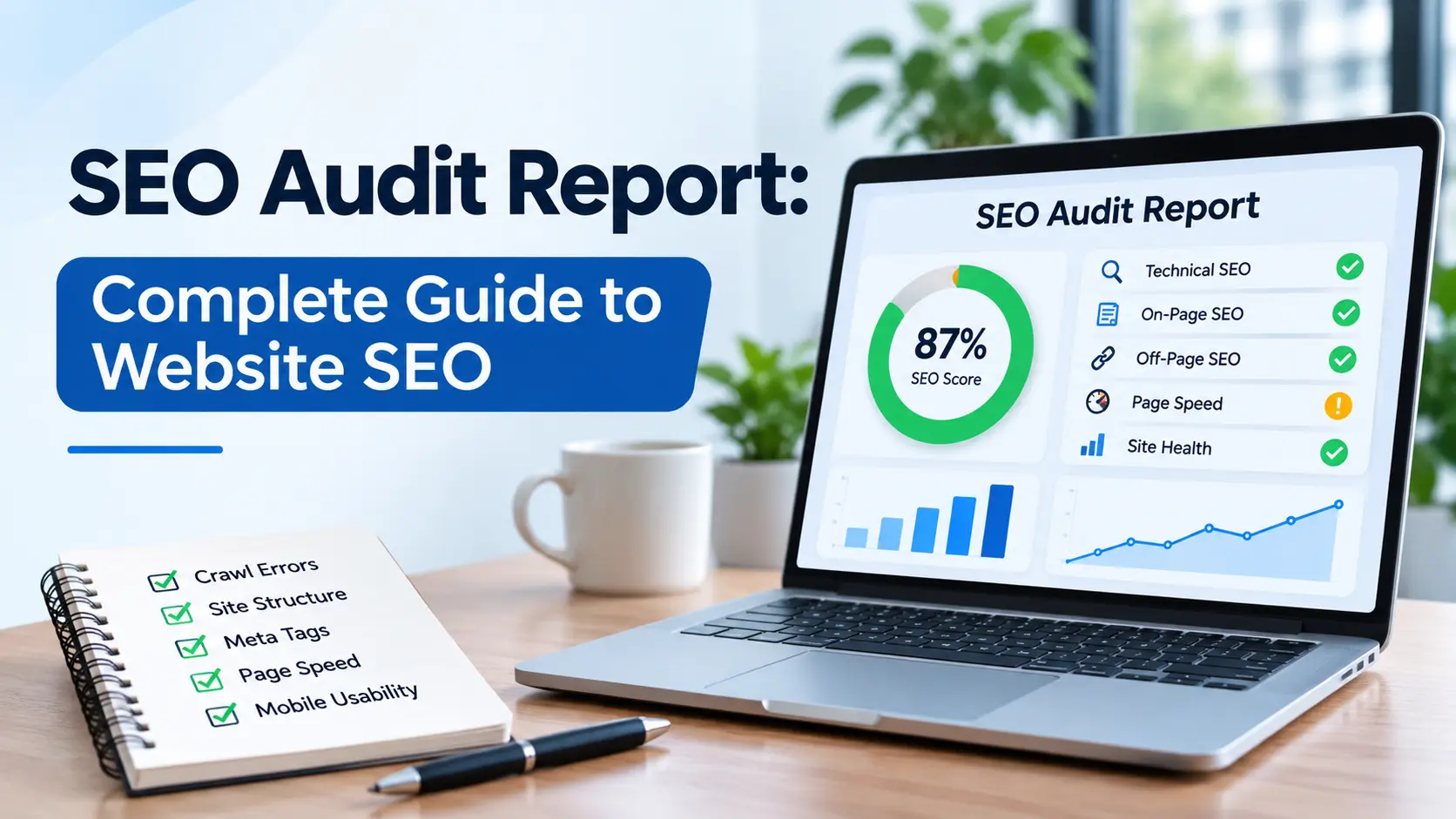
A website can have useful content, a strong design, and clear information but still struggle to perform well in search results. An SEO audit report helps uncover the issues that may be limiting visibility, including broken links, slow page speed, missing metadata, weak site structure, indexing problems, and other technical SEO errors.
Regular SEO audits give website owners a clearer view of what is working and what needs attention. Whether you manage a small business website, ecommerce store, or SaaS platform, an audit can help you identify priority issues, improve search performance, and make more informed optimization decisions.
This guide explains what an SEO audit report includes, why it matters, which areas to review, and which tools can help you find and fix SEO problems.

What Is an SEO Audit Report?
An SEO audit report is a detailed analysis of a website that identifies problems affecting its performance in search engine results. It examines different SEO factors, including technical SEO, on-page optimization, website content, backlinks, mobile usability, and page speed.
The main purpose of an SEO audit is to understand what is working well and what needs improvement. Instead of making random SEO changes, website owners can use audit findings to create a clear optimization strategy.
For example, an audit might identify that several website pages have duplicate title tags, some images are missing alt text, or important pages are not indexed by Google. Fixing these issues can help AI search engines understand your website more effectively.
Why Is an SEO Audit Important for Your Website?
SEO is not a one-time activity. Search engine algorithms change, websites grow, and new technical problems can appear over time. Regular audits help you keep your website optimized and competitive.
Here are some important benefits of performing an SEO audit:
1. Identify Technical SEO Problems
Technical issues can prevent search engines from crawling and indexing your website properly. An SEO audit helps identify problems such as broken links, crawl errors, incorrect redirects, and sitemap issues.
2. Improve Website Visibility
Search engines need to understand your website content before showing it in search results. Proper headings, relevant keywords, optimized titles, and internal links help search engines understand your pages.
3. Find Content Optimization Opportunities
An audit can reveal pages with outdated information, thin content, duplicate content, or missing keyword targeting. Updating these pages can make your website more useful to visitors.
4. Improve User Experience
Website speed, mobile responsiveness, and easy navigation are important parts of website performance. An audit helps identify areas where visitors may experience difficulties.
5. Stay Ahead of Competitors
Analyzing competing websites can help you discover content opportunities, keyword gaps, and topics that your competitors are targeting successfully.
Important Areas to Include in an SEO Audit Report
A useful SEO audit should cover multiple areas rather than focusing only on keywords. Each section provides different insights into your website’s overall performance.
1. Technical SEO Audit
A strong website foundation depends on effective technical SEO services, which help improve website structure, ensure search engine accessibility, and make it easier for search engines to crawl and index important pages.
During a technical audit, check the following:
- Website crawlability and indexability.
- XML sitemap availability.
- Robots.txt configuration.
- Broken links and redirect errors.
- HTTPS security.
- Mobile usability.
- Website loading performance.
- Canonical tags.
- Duplicate URL issues.
For example, if an important service page is accidentally blocked by robots.txt, search engines may not be able to crawl it. Identifying and correcting this issue can improve the page’s accessibility to search engines.
2. On-Page SEO Audit
Effective on-page SEO services help optimize individual website pages by improving content structure, HTML elements, keyword placement, and other important on-page factors to make pages more relevant to search engines and users.
Important elements to review include:
- SEO title tags.
- Meta descriptions.
- H1, H2, and H3 headings.
- Primary and secondary keyword placement.
- URL structure.
- Image alt text.
- Internal linking.
- Content quality and relevance.
For example, if your target keyword is not clearly reflected in the page title or main heading, visitors and search engines may find it harder to understand the page’s main topic.
However, keywords should always be used naturally. Adding the same keyword repeatedly does not guarantee better rankings.
3. Website Content Audit
Content plays an important role in SEO performance. A website content audit helps identify pages that need updating, improvement, or consolidation.
Review your website for:
- Thin or incomplete content.
- Duplicate information.
- Outdated articles.
- Missing search intent.
- Poor content organization.
- Pages receiving little organic traffic.
- Content that does not provide enough value to readers.
Focus on creating helpful, accurate, and original content that answers users’ questions. Avoid publishing articles only to target keywords.
4. Backlink Profile Analysis
Backlinks are links from other websites pointing to your website. They can help search engines understand your website’s authority and relevance.
During a backlink audit, review:
- Number of referring domains.
- Quality and relevance of backlinks.
- Lost backlinks.
- Suspicious linking patterns.
- Competitor backlink opportunities.
Not every backlink is valuable. Focus on relevant and trustworthy websites instead of trying to collect as many links as possible.
5. Website Speed and Mobile Performance
Visitors expect websites to load smoothly on different devices. Slow pages and poor mobile experiences can frustrate users.
Check important performance factors such as
- Largest Contentful Paint (LCP).
- Interaction to Next Paint (INP).
- Cumulative Layout Shift (CLS).
- Image optimization.
- Unnecessary scripts.
- Mobile responsiveness.
Google PageSpeed Insights can help you understand performance issues and identify possible improvements.
What Is a SaaS SEO Audit and Why Does It Matter?
A SaaS SEO audit is an SEO analysis specifically designed for software-as-a-service websites. SaaS businesses often have different website structures and marketing goals compared to traditional business websites. Their websites may include product pages, feature pages, pricing pages, integration pages, comparison articles, and educational resources.
A SaaS SEO audit should focus on the following areas:
Product & Feature Page Optimization
Every important product and feature page should clearly explain what the software does, who it helps, and what problems it solves.
Keyword Research & Search Intent
Identify keywords potential customers use when searching for software solutions. Target informational, commercial, and comparison-based search queries with relevant content.
Competitor Content Analysis
Analyze competing SaaS websites to discover content gaps, missing topics, and opportunities to create more useful resources.
Conversion Optimization
Organic traffic is valuable, but SaaS websites also need to guide visitors toward meaningful actions, such as requesting a demo or exploring product features.
Internal Linking Structure
Connect blog articles with relevant feature, product, and pricing pages to help visitors discover useful information and search engines understand your website structure.
Ecommerce SEO Audits: What Should You Check?
Ecommerce websites require special attention because they often contain hundreds or thousands of product and category pages. The audits help online store owners identify issues that affect product visibility and organic search traffic.
Here are the most important areas to review:
Product Page Optimization
Make sure product pages have unique titles, helpful descriptions, relevant images, and clear information.
Category Page Structure
Organize products into logical categories and subcategories. This helps visitors find products easily and creates a clear website structure.
Duplicate Content Issues
Similar products, filters, and sorting options can create multiple URLs with similar content. Review canonical tags and indexing rules to manage these pages properly.
Product Image Optimization
Use descriptive image filenames, appropriate alt text, and compressed image formats to improve accessibility and loading performance.
Structured Data
Use relevant product structured data to help search engines understand product information, such as price, availability, and ratings when applicable.
Mobile Shopping Experience
Check whether product pages, navigation, filters, and checkout-related pages work smoothly on mobile devices.
Best Website Audit Free Tools You Can Use
You do not always need expensive software to start analyzing your website. Several free tools provide useful information about SEO performance and technical problems.
Here are some helpful free website audit tools:
1. Google Search Console
Google Search Console helps website owners monitor their website’s performance in Google Search.
You can use it to:
- Monitor search impressions and clicks.
- Identify indexing issues.
- Review search queries.
- Check sitemap status.
- Find certain page experience and technical issues.
2. Google PageSpeed Insights
This tool analyzes website speed and performance on mobile and desktop devices. It also provides suggestions for improving Core Web Vitals.
3. Screaming Frog SEO Spider
Screaming Frog helps crawl websites and identify technical SEO problems, including broken links, missing titles, duplicate metadata, and redirect issues. Its free version has a crawl limit.
4. Ahrefs Webmaster Tools
This tool provides website audit and backlink information for verified websites. It can help identify technical SEO issues and backlink opportunities.
5. Bing Webmaster Tools
Bing Webmaster Tools provides website performance information, indexing insights, and SEO recommendations for websites appearing in Bing search results.
Using these tools together can provide a more complete understanding of your website’s SEO health.
How to Use an SEO Toolbox Effectively
An SEO toolbox is a collection of tools that helps website owners and SEO professionals analyze, monitor, and improve website performance. Instead of relying on a single tool, you can use different tools for specific SEO tasks.
For example:
- Use Google Search Console for search performance and indexing.
- Use PageSpeed Insights for website performance.
- Use Screaming Frog for technical crawling.
- Use Ahrefs or Semrush for keyword and backlink research.
- Use Google Analytics to understand website traffic and user behavior.
The important thing is to understand what each tool measures. A tool may identify an issue, but you still need to evaluate its importance and decide how to fix it.
What Is SEO Gap Analysis?
SEO gap analysis is the process of comparing your website’s SEO performance with competing websites to discover opportunities for improvement. It helps you understand what your competitors are doing that your website may be missing. A proper SEO gap analysis usually includes three important areas:
1. Keyword Gap Analysis
Compare the keywords your website ranks for with the keywords your competitors target. This can help you discover relevant search terms that you have not covered yet.
2. Content Gap Analysis
Content gap analysis helps identify missing content opportunities by comparing your website with competitors’ blogs, guides, product pages, and other relevant resources to discover topics that can add more value to your audience.
3. Backlink Gap Analysis
Compare referring domains and backlink profiles to identify relevant websites that link to competitors but not to your website. Remember, the goal is not to copy competitors. It is to identify useful opportunities and create something better for your audience.
How to Create an Effective SEO Audit Report Step by Step
Creating a useful audit report does not have to be complicated. Follow these steps to organize your findings.
Step 1: Understand the Website Goals
Before starting the audit, understand the website’s purpose. A business website, SaaS platform, and e-commerce store may have different SEO priorities.
Step 2: Crawl the Website
Use an SEO crawling tool to analyze website URLs, page titles, meta descriptions, headings, redirects, and broken links.
Step 3: Check Google Search Performance
Review Google Search Console to understand which pages receive impressions and clicks, and identify indexing or search performance issues.
Step 4: Review On-Page SEO
Check important landing pages and blog posts for keyword relevance, title tags, headings, internal links, and content quality.
Step 5: Analyze Competitors
Identify your main organic competitors and compare their keywords, content coverage, and backlink profiles.
Step 6: Prioritize SEO Issues
Not every problem needs immediate attention. Prioritize issues based on their potential impact, importance, and difficulty of implementation.
Step 7: Prepare the Final Report
Organize your findings into a clear document containing:
- Website issue.
- Affected URL.
- Explanation of the problem.
- Recommended solution.
- Priority level.
- Suggested action.
This makes the audit report easier to understand and helps website owners follow a practical improvement plan.
Common SEO Audit Mistakes to Avoid
Even experienced website owners can make mistakes during SEO audits. Avoid these common problems:
- Focusing only on keyword rankings.
- Ignoring technical SEO issues.
- Using automated tool scores as the only measure of website quality.
- Repeating keywords unnaturally.
- Ignoring mobile performance.
- Creating duplicate content.
- Building irrelevant backlinks.
- Fixing minor issues while ignoring important indexing problems.
A successful SEO audit focuses on meaningful improvements rather than achieving a perfect score in every SEO tool.
Conclusion:
An SEO audit is an essential part of building and maintaining a successful website. It helps identify technical issues, improve on-page optimization, evaluate content quality, analyze backlinks, and discover new keyword opportunities. Whether you manage a SaaS platform, an ecommerce store, or a business website, a detailed SEO audit report provides valuable insights into your website’s strengths and weaknesses.
Regular SEO audits, helpful content, proper technical optimization, and competitor research can help improve search visibility and support long-term organic growth. By identifying important issues and addressing them with the right strategies, website owners can create a better user experience and build a stronger online presence.
At WaysPro Tech, we help businesses strengthen their digital presence through effective digital solutions and strategic SEO approaches. Explore our services to discover how we can support your website’s growth and improve its online visibility.
Frequently Asked Questions
1. What Is an SEO Audit Report?
An SEO audit report is a detailed analysis of a website that identifies technical, on-page, content, and backlink issues affecting its search engine performance. It also provides recommendations to improve website visibility and organic traffic.
2. How Often Should You Perform an SEO Audit?
It is a good practice to perform a comprehensive SEO audit every 3 to 6 months. However, websites with frequent updates, large product catalogs, or major technical changes may need more regular checks.
3. What Are the Best Free Tools for an SEO Audit?
Some useful free SEO audit tools include Google Search Console, Google PageSpeed Insights, Bing Webmaster Tools, and Screaming Frog SEO Spider. These tools help identify website performance and optimization issues.
4. What Is the Difference Between a Technical SEO Audit and an On-Page SEO Audit?
A technical SEO audit focuses on website structure, crawling, indexing, page speed, and technical errors. An on-page SEO audit focuses on page elements such as title tags, meta descriptions, headings, keywords, internal links, and content quality.
5. What Is SEO Gap Analysis?
SEO gap analysis is the process of comparing your website with competitors to identify missing keywords, content opportunities, and backlink gaps. It helps you discover areas where your website can improve its search visibility.