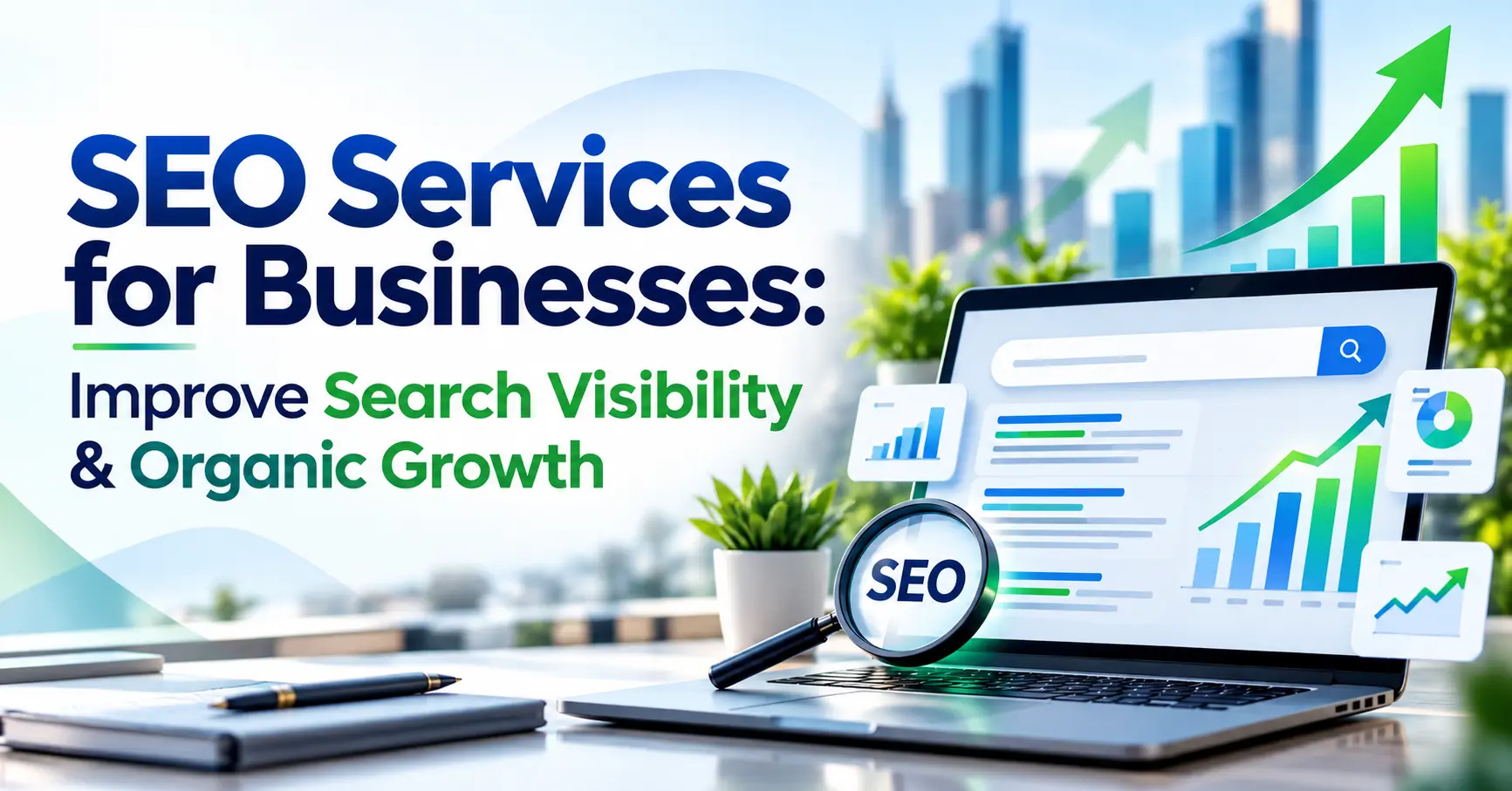
Search visibility plays a major role in how easily potential customers can find a business online. When people search for products, services, solutions, or information related to a company, appearing in relevant organic results creates an opportunity to attract qualified visitors. SEO services for businesses help improve that visibility through keyword research, technical SEO, on-page optimization, content strategy, local SEO, link building, and performance analysis.
A business-focused SEO strategy goes beyond improving rankings. It connects search demand with the company’s services, audience, website structure, content, and conversion goals. Whether the goal is to generate more leads, attract local customers, improve ecommerce visibility, or build long-term organic traffic, SEO provides a structured way to strengthen discoverability across search engines.
What Are SEO Services for Businesses?
SEO services for businesses are professional search engine optimization activities designed to help a company improve its visibility for searches relevant to its products, services, locations, and target audience.
Instead of treating SEO as a collection of isolated tasks, business SEO services bring different areas of optimization together under one strategy. This can include improving website crawlability, researching customer search behavior, optimizing service pages, strengthening internal links, creating useful content, earning relevant backlinks, and measuring organic search performance.
A business SEO strategy typically focuses on three connected goals:
- Helping search engines crawl, understand, and index important website pages
- Helping potential customers find useful pages that match their search intent
- Turning relevant organic traffic into inquiries, leads, purchases, or other business actions
Professional SEO is therefore not limited to placing keywords on pages. It involves improving the website as a whole so that its technical foundation, content, structure, and authority support stronger organic search performance.
Why Are SEO Services Important for Businesses?
Customers often use search engines to research problems, compare companies, evaluate services, or decide what to buy. If a business has little visibility for the searches its customers are making, competitors may receive that traffic instead.
SEO helps close that visibility gap.
Effective search visibility services can help businesses appear for searches at different stages of the customer journey. Someone may initially search for information about a problem, later compare available solutions, and eventually search for a specific service provider. A strong SEO strategy can create relevant pages for each stage.
The main benefits include:
- Improving visibility for relevant search queries.
- Reaching users who are actively searching for solutions.
- Increasing qualified organic website traffic.
- Supporting lead generation and sales opportunities.
- Building visibility beyond paid advertising campaigns.
- Improving website usability and information structure.
- Strengthening local search presence where applicable.
- Creating long-term assets through optimized service pages and useful content.
SEO does not produce instant or guaranteed rankings. It is an ongoing process that improves a website’s ability to compete for relevant searches over time.
What Services Are Included in SEO Services for Businesses?
A complete SEO campaign normally combines research, technical work, content optimization, authority development, and performance measurement. The exact scope depends on the website, industry, competition, locations, and business objectives.
SEO Audit and Strategy
A strong SEO campaign should begin with an understanding of the website’s current condition.
An SEO audit can identify technical problems, content gaps, indexing issues, weak page structures, internal linking opportunities, backlink concerns, and areas where competitors have stronger search visibility.
An SEO strategy for a business may include:
- Website and technical SEO audits
- Competitor analysis
- Organic search performance review
- Keyword opportunity analysis
- Content gap identification
- Page and site architecture planning
- Local SEO assessment
- Backlink profile review
- Priority recommendations
- Short- and long-term SEO roadmaps
The goal is to identify the most relevant improvements instead of applying the same SEO checklist to every website.
Keyword Research and Search Intent Analysis
Keyword research identifies how potential customers search for information, products, services, and solutions.
Effective keyword research goes beyond search volume. Each keyword should be evaluated according to its relevance, competition, search intent, and connection to the business.
Search intent commonly falls into categories such as:
- Informational: The user wants to learn something.
- Commercial: The user is comparing services, products, or providers.
- Transactional: The user is ready to take an action such as buying or requesting a service.
- Navigational: The user is looking for a particular company, website, or page.
Understanding intent helps businesses decide whether a keyword belongs on a service page, product page, landing page, blog article, comparison page, FAQ, or another content type. A well-planned keyword strategy also prevents multiple pages from unnecessarily competing for the same search intent.
On-Page SEO Services
On-page SEO services improve individual website pages so their purpose, subject, and value are clearer to users and search engines.
This optimization can include:
- Optimizing title tags
- Writing relevant meta descriptions
- Improving H1, H2, and H3 heading structure
- Matching page content with search intent
- Using primary and related keywords naturally
- Improving page introductions
- Optimizing service and product descriptions
- Adding relevant internal links
- Improving image alt text where appropriate
- Organizing content for readability
- Removing duplicate or thin content
- Strengthening calls to action
For example, a page targeting “SEO services for businesses” can naturally cover related concepts such as technical SEO, keyword research, local SEO, organic traffic, search visibility, content optimization, backlinks, and performance reporting.
This creates stronger topical coverage while keeping the content useful for the reader.
Technical SEO Services
Technical SEO services focus on problems that can affect how search engines discover, crawl, render, index, and understand a website.
A technically weak website can limit the performance of otherwise useful content.
This optimization can include:
- Crawlability reviews
- Indexing analysis
- XML sitemap checks
- Robots.txt reviews
- Canonical tag implementation
- Redirect management
- Broken link identification
- Duplicate URL management
- HTTPS and security checks
- Mobile usability improvements
- Website speed optimization
- Core Web Vitals analysis
- Structured data and schema markup
- Site architecture improvements
- Internal linking reviews
- JavaScript rendering checks where required
Technical SEO becomes particularly important for larger websites, ecommerce stores, websites that have been redesigned or migrated, and sites with large numbers of dynamic URLs.
Regular monitoring can also identify new crawl or indexing problems before they affect a larger portion of the website.
SEO Content Strategy and Content Optimization
Search engines need useful pages to rank, and users need useful information before they can make decisions.
An SEO content strategy connects topics people search for with the information a business is qualified to provide.
This optimization can include:
- Creating new service pages
- Improving existing website copy
- Developing blog content around relevant topics
- Expanding pages that do not fully answer search intent
- Building topic clusters
- Addressing frequently asked customer questions
- Optimizing headings and page structure
- Adding relevant internal links
- Updating outdated information
- Consolidating overlapping content
The objective is not to publish as much content as possible. Businesses benefit more from useful pages that serve a clear purpose and fit naturally within the overall website.
Content can also support different parts of the customer journey. Informational articles can introduce a problem or topic, while commercial service pages can explain how the business solves that problem.
Businesses that need support producing optimized website and blog content can also connect SEO strategy with professional content writing services.
Internal Linking and Website Structure
Internal links connect pages within the same website.
They help users move between related topics while also helping search engines discover pages and understand relationships between them.
A strong internal linking strategy may connect:
- Blogs with relevant service pages
- Supporting articles with pillar content
- Service pages with related services
- Location pages with core service pages
- Product categories with individual products
- FAQs with deeper educational resources
Anchor text should describe the destination naturally instead of repeatedly using the exact same keyword.
Site architecture also matters. Important pages should be reasonably easy to reach rather than being buried deep within the website.
Link Building and Website Authority Development
Backlinks are links from other websites to your website.
Relevant links can help search engines discover content and can contribute to a website’s reputation and visibility. However, link quality is more important than simply increasing the number of referring domains.
A sustainable link-building strategy may include:
- Digital PR
- Relevant guest contributions
- Industry publications
- Resource-page outreach
- Useful original content that earns references
- Business and industry partnerships
- Relevant local citations
- Link reclamation
- Unlinked brand mention outreach
Businesses should avoid relying on spammy directories, automated link networks, irrelevant guest posts, or large quantities of low-quality links simply to increase backlink counts.
Authority development works best when links are relevant to the business, industry, audience, or content being referenced.
Local SEO Services for Businesses
Businesses serving specific cities, regions, or service areas may also require local SEO. Local SEO services for businesses focus on improving visibility when users search for nearby products and services.
This can include:
- Google Business Profile optimization
- Accurate business information
- Local keyword research
- Location page optimization
- Local citations
- Review management
- Local business schema
- Map visibility
- Local backlink opportunities
- Consistent name, address, and phone information where applicable
For service providers, medical practices, contractors, restaurants, professional services, and other location-focused companies, local visibility can be as important as traditional organic rankings.
WaysPro Tech also provides dedicated Local SEO services for businesses targeting customers within specific geographic markets.
SEO Analytics, Reporting, and Ongoing Optimization
SEO should be measured rather than managed through assumptions. Reporting helps businesses understand what is improving, where problems remain, and which activities are contributing to organic growth.
Useful SEO metrics can include:
- Organic clicks
- Organic impressions
- Keyword visibility
- Landing-page traffic
- Search click-through rate
- Leads and conversions from organic traffic
- Indexed page status
- Local search visibility
- Backlink growth and quality
- Technical SEO issues
- Website engagement and conversion behavior
Platforms such as Google Search Console and Google Analytics can provide useful performance data, while SEO platforms can support keyword tracking, technical audits, competitor research, and backlink analysis.
Reporting should connect SEO performance with business outcomes instead of focusing only on rankings.
How Do SEO Services Help Businesses Increase Organic Traffic?
SEO increases organic traffic by improving both visibility and relevance. A website does not benefit simply because more people visit it. The stronger objective is attracting people whose searches indicate genuine interest in the information, products, or services the business offers. SEO supports this process in several ways.
Better Visibility for Relevant Keywords
Keyword research identifies searches connected to the business. Optimizing the right pages for these topics gives a website more opportunities to appear when potential customers are searching.
More Qualified Website Visitors
Search intent helps distinguish between traffic that is merely informational and traffic that has stronger commercial potential. A professional SEO strategy targets both where appropriate, then creates clear pathways from informational content to relevant services or products.
Improved Website Experience
Technical and on-page improvements can make pages easier to navigate, faster to use, and clearer to understand. Better page organization also helps users find the information they need without unnecessary friction.
Stronger Content Coverage
One page cannot answer every question related to a business. A structured content strategy allows a website to cover supporting topics, common questions, comparisons, problems, and service-specific information while connecting those pages through internal links.
More Opportunities for Leads and Conversions
Organic traffic becomes more valuable when visitors have a clear next step.
Depending on the business, that could be:
- Requesting a quote
- Booking a consultation
- Calling the business
- Completing a contact form
- Buying a product
- Registering for a service
- Downloading a resource
| SEO Activity | Primary Purpose | Potential Business Impact |
| Keyword research | Identify relevant search demand. | Attract more qualified visitors |
| On-page SEO | Improve page relevance and structure. | Increase search visibility. |
| Technical SEO | Improve crawling, indexing, and performance. | Create a stronger search foundation. |
| Content strategy | Cover customer questions and topics | Expand organic search reach. |
| Internal linking | Connect related pages. | Improve navigation and page discovery. |
| Link building | Earn relevant external references. | Strengthen website credibility. |
| Local SEO | Improve location-based visibility. | Reach nearby customers. |
| Analytics | Measure SEO performance. | Support better decisions. |
SEO Services for Small Businesses to Improve Online Visibility
This SEO services for small businesses can be especially useful when a company needs to compete with larger brands without depending entirely on paid advertising. Small businesses may not need hundreds of pages or an overly complex SEO campaign. They often benefit from focusing first on the areas that have the strongest connection to revenue.
This may include:
- Optimizing core service pages
- Improving Google Business Profile visibility
- Targeting relevant local searches
- Fixing technical website problems
- Creating content around real customer questions
- Improving website speed and mobile usability
- Building strong internal links
- Earning relevant local and industry backlinks
- Tracking leads from organic search
Prioritization is important when resources are limited.
For example, a local service business may gain more value from improving its core service pages, location signals, reviews, and Google Business Profile than from publishing large volumes of unrelated blog content.
Small businesses evaluating a broader online growth strategy can also read our guide on why small businesses need a digital marketing agency to compete online.
What Are the Benefits of Hiring Professional SEO Services?
Businesses can manage parts of SEO internally, but SEO often requires coordination between content, website development, analytics, technical troubleshooting, and marketing.
Hiring professional SEO services can provide several advantages.
Access to Specialized SEO Knowledge
SEO includes multiple disciplines. A technical issue involving canonical tags requires a different skill set from keyword research, content planning, digital PR, or local SEO. An experienced SEO team can bring these areas together under one strategy.
A More Structured SEO Process
Professional SEO services normally follow a process that includes research, auditing, prioritization, implementation, monitoring, and improvement. This creates more consistency than making isolated changes whenever a ranking issue appears.
Better Use of SEO Data
SEO teams use data to understand what users are searching for, which pages are gaining visibility, where competitors perform well, and which website issues require attention. This allows decisions to be based on evidence rather than assumptions.
Time for Internal Teams to Focus Elsewhere
Running a business already requires attention across sales, customer service, operations, finance, and other responsibilities. Outsourcing SEO can reduce the amount of time internal teams spend managing keyword research, technical audits, content optimization, reporting, and link acquisition.
Ongoing Optimization
SEO is not a one-time website setup. Websites change. Competitors publish new content. Search behavior changes. New technical issues appear. Products and services evolve. Ongoing SEO helps the website adapt as these conditions change.
What Should a Business SEO Strategy Include?
A useful SEO strategy should connect optimization work with specific business goals.
A typical process may include:
- Understand the business and target audience
Identify the services, products, markets, locations, customer types, and commercial priorities that matter most. - Audit current organic search performance
Review rankings, traffic, indexed pages, technical health, backlinks, content, and competitors. - Build a keyword and search-intent map
Match important searches with the correct existing or planned pages. - Prioritize technical SEO issues
Fix problems that affect crawling, indexing, performance, mobile usability, or site structure. - Optimize important commercial pages
Improve service, product, category, and location pages based on search intent and customer needs. - Develop supporting content
Create useful articles and resources that answer relevant questions and strengthen topic coverage. - Improve internal and external authority signals
Strengthen internal linking and pursue relevant backlink opportunities. - Measure performance and refine the strategy
Track organic visibility, traffic, leads, conversions, and technical health.
The priorities may differ significantly from one business to another. That is why effective SEO should begin with analysis rather than a fixed checklist.
How to Choose the Right SEO Agency for Your Business
Choosing an SEO agency requires more than comparing package prices. Businesses should evaluate how the agency approaches research, implementation, communication, reporting, and accountability.
Review Their SEO Approach
Ask how the agency determines priorities. A credible SEO provider should be able to explain why particular technical, content, or authority improvements are recommended for your website.
Look for Relevant SEO Capabilities
Depending on your needs, this may include:
- Technical SEO
- On-page optimization
- Keyword research
- Local SEO
- SEO content strategy
- Link building
- Ecommerce SEO
- Website optimization
- Analytics and reporting
You may not need every service, but the agency should understand how different SEO activities affect one another.
Ask How Performance Is Measured
Avoid evaluating SEO only by the number of keywords tracked. Reporting should connect visibility with meaningful outcomes such as organic traffic, qualified inquiries, leads, ecommerce revenue, calls, or bookings where tracking is available.
Evaluate Communication and Transparency
Your SEO partner should be able to explain:
- What work is being completed
- Why it matters
- What has improved
- What still requires attention
- What the next priorities are
SEO should not operate as a black box.
Be Careful With Guaranteed Rankings
No legitimate SEO agency can control search engine rankings. Be cautious when a provider guarantees a specific number-one position, promises immediate organic growth, or claims to have special access to search engine algorithms.
A professional agency can explain its strategy and expected direction, but rankings depend on many factors outside the agency’s direct control.
Check Whether the Strategy Fits Your Business
A local contractor, e-commerce store, a SaaS company, and a national B2B company should not receive identical SEO strategies.
Look for an agency that understands your business model, target customer, website, competition, and growth priorities before defining the campaign.
Common SEO Mistakes Businesses Should Avoid
SEO problems are not always caused by a lack of optimization. Sometimes they come from doing too much of the wrong type of optimization.
Common mistakes include:
- Targeting keywords without understanding search intent
- Repeating exact-match keywords unnaturally
- Creating multiple pages for the same search purpose
- Publishing thin content only to target more keywords
- Ignoring technical crawl and indexing issues
- Buying large quantities of low-quality backlinks
- Neglecting important service and product pages
- Creating location pages with nearly identical content
- Ignoring mobile usability and website speed
- Failing to track organic leads and conversions
- Changing URLs without appropriate redirects
- Treating SEO as a one-time project
- Copying competitor content instead of providing original value
The objective should be to create a website that clearly explains what the business offers, answers relevant customer questions, works technically, and makes important information easy to find.
How Can You Measure SEO Success?
SEO success should be measured against the purpose of the website. For an informational publisher, organic traffic and readership may be important. like a service business, qualified leads may matter more. For ecommerce, organic revenue can be a stronger metric.
Businesses can monitor:
- Growth in relevant organic clicks
- Visibility for priority search topics
- Performance of commercial landing pages
- Organic leads and inquiries
- Ecommerce conversions
- Local calls and actions
- Search impressions
- Click-through rates
- Indexed page coverage
- Technical SEO health
- Backlink quality
- Conversion rates from organic visitors
Rankings are useful, but they should not be the only measure of success. A keyword moving from position 40 to position 15 shows progress, but a page generating qualified leads provides a clearer business outcome.
Why Choose WaysPro Tech for SEO Services?
WaysPro Tech provides SEO services for businesses that want a structured approach to improving organic search visibility. Our SEO work can include keyword research, on-page optimization, technical SEO, website audits, content support, link building, local SEO, speed optimization, and performance tracking. The scope is built around the website’s current condition, target market, search opportunities, and business priorities. We focus on identifying what is limiting search performance, prioritizing the changes that matter, and tracking how the website performs after those improvements are implemented.
Businesses may need different combinations of SEO support. A local company may need stronger Google Business Profile and location visibility. An established website may need technical cleanup and content consolidation. A growing company may need a broader content and authority strategy. The objective is the same: improve relevant search visibility and turn organic search into a more useful acquisition channel for the business.
Frequently Asked Questions About SEO Services for Businesses
Can SEO services help generate qualified leads for a business?
Yes, SEO can attract users with relevant search intent and increase opportunities for inquiries, calls, sign-ups, and sales.
Should a business invest in SEO or PPC first?
The right choice depends on goals, budget, and timeline, but many businesses use PPC for immediate visibility and SEO for long-term organic growth.
Why is technical SEO important for business websites?
Technical SEO helps search engines crawl, index, and understand a website while improving performance, mobile usability, and overall search visibility.
What types of businesses benefit most from SEO services?
Local businesses, ecommerce stores, SaaS companies, professional services, B2B firms, and other businesses with searchable customer demand can benefit from SEO.
When should a business hire an SEO agency?
A business should consider an SEO agency when organic visibility is weak, technical issues are limiting performance, or internal teams lack the time or expertise to manage SEO effectively.